
I first began training mobile marketers soon after the smartphone era began. Lots has changed - user behavior, screens, and exceptions. I’m pleased to bring to marketers a freshened look at the opportunities. You can find my new material for the Association of National Advertisers (ANA) here. Let me know what you think.

The Post-COVID 19 Digital and Mobile Experiences Consumers Value Most
Beyond the personal and family safety and logistical challenges presented to marketers by COVID-19 is the difficulty on the professional side in getting a read on the attitudes of customers and prospects.
Certainly, there is no uniformity in behavior, risk tolerance, and buying patterns. And there never will be in one country, much less globally.
It’s unwise to guess or rely on a hunch.
At Sinch, a global leader in cloud communications for mobile customer engagement, we decided to ask.
In a survey of consumers across 14 countries, we found the following:
COVID-19-induced behaviors such as avoiding crowds, flying, and dining out are here to stay, even in a post-pandemic world.
According to the study (downloadable here), even when the pandemic is over, 58% of people will continue to avoid crowds, 52% will avoid unnecessary travel, 46% will spend less time inside stores and 45% will dine out less often.
The study also found that, despite a decade of digital transformation, brands have yet to deliver the most useful digital and mobile experiences people say they want in a post-pandemic world, like making and confirming appointments by text, receiving personalized videos, or being able to message with banks, doctors and other service providers. The research report explores the opportunities available for brands nimble enough to transform the value they bring to customers.
What makes this moment particularly powerful is that just as customers are turning away from physical interactions and transactions, the ecosystem of tools and channels that empower digital conversations is exploding. Facebook Messenger and WhatsApp, the most popular messaging apps in the world, now claim 3.3 billion monthly active users. And yet, the research shows enterprise brands have been slow to innovate via messaging.
This opportunity is quantified by the gaps between the services customers already use and what they say would be very useful. For example:
· 91% want mobile notifications of suspicious activity (e.g., banking), but currently, only 31% receive them
· 89% would find notifications about a service outage useful, but only 27% today receive them
· 88% would consider it valuable to have information about urgent public health care issues delivered by text or messaging, but only 24% currently receive this service
· 73% want to receive personalized videos (e.g., an illustration of services performed by an auto mechanic), but only 16% currently do
· 88% want to make an appointment by text or messaging, but today only 36% of people are able to
· Similarly, 52% of respondents today have confirmed an appointment by text or messaging but 94% would value this service
· 75% would appreciate getting reminders by text about items left in an online shopping cart, whereas just 39% currently do
· Just 14% of people today use any kind of mobile or online health assessment with a medical provider, something that 78% would like
· 41% currently receive personal discounts via text or messaging but 86% would value this offering
Using next-generation messaging, voice, video, and chatbots, global companies can now have highly personalized conversations with their customers at scale. Not only does this drive better customer experiences but real business value in terms of increased sales, decreased costs, or an uptick in customer loyalty.
Is this the end-all study? Certainly not, but it provides important insights into what an industry analyst told us is part of the “new normal”.

The Return of Notes From A Mobilized Marketer
Those who go back with me may recall that I regularly wrote and posted Notes From A Mobilized Marketer following the publication of my first book, Mobilized Marketing, in 2012.
And for those who go back -- way, way back with me -- you likely remember that I’m a former journalist who have always sought to find the interesting, especially those things that matter, and to be provocative in my writing.
The column went on hiatus as life got busier and attention turned elsewhere.
The break is over.
Why?
There are so many thoughts, questions, doubts, fears, and, on the many good days, hopes that it’s time to write more regularly. I know for sure that this Notes phase will be more personal than ever, and I’ll surely look to spark conversation again.
We need each other more than ever and I’m starting this effort up again not to spew but to share and hopefully to hear from you if something strikes a chord.
Let’s go.
On any given day, my emotions run from overcome to optimistic but there are way too many days when the mindset goes in reverse. I don’t have a handle on my psyche and I’ll bet that there are loads of us in the same place. What does this have to do about marketing? Everything. We are nothing without consumer insights. But today more than ever, labeling someone this or that fails to account for the fact that in a pandemic, in lots of ways, someone – your customer or prospect -- is this and that. …
The auto insurers knew enough to offer rebates given the minimal driving that we are doing. My inbox tells me that the car service companies, including those that primarily change oil, either don’t realize that our patterns have changed or are too stupid or programmatic to make the necessary adjustment. …
Some of the wisest communications that I’ve seen have come from Alaska Airlines who have regularly informed customers of steps it is taking to keep everyone safe. That’s hardly unique for an airline, but what did get me to notice was a new and very human video centered on the idea that Alaska Airlines will be there “when you are ready.” https://blog.alaskaair.com/coronavirus/alaska-airlines-coronavirus-supporting-guests-team/. No hard sell. No false conclusion that people will take to the skies at the same time. Instead, it was empathetic and real. And smart. …
So much has changed during COVID-19, but what hasn’t is that I fail to listen. Marketer and wise man Seth Godin told me and us on March 20 to stay away from social networks all the time, but especially these days. https://seths.blog/2020/03/calm-also-has-a-coefficient/. “Twitter has been engineered to maximize panic. Calm is penalized, panic is amplified.” I’ve had way too many days feeling panic from what I’ve seen on Twitter. My weak defense is that I’m a news junkie – I have been since I was first able to read – and that I have to live life in real time. During the pandemic, for me at least, it’s been a path to being upset and defeated. And it’s self-inflicted. I need to do better. Now. And that includes time on Facebook. …
You’ll be snockered in no time if you down a shot every you hear the term, “We live in unprecedented times” in a commercial during a night of television watching. This is neither a news flash nor an original or compelling thought …
It’s always about clicks, never more so than today. Coronavirus may come back stronger in the fall is as definitive as a 100-item menu, yet this is positioned as news just about every day on CNBC and elsewhere.
I’ve long held the belief that you need to revisit your marketing playbook every six months. These days, the conversations need to happen weekly.
In about the time that it takes to fly from Chicago to San Francisco, Frontier Airlines reversed its plan to charge passengers who wanted to guarantee that a middle seat would be empty. https://www.cnn.com/travel/article/frontier-airlines-rescinds-middle-seat-pay-trnd/index.html. That the original idea saw the light of day is incredibly dumb. …
Until next time. Stay safe.

Email or Mobile Message? What Consumers Say They Want From Businesses
Consumers are 35x more likely to open mobile messages than emails per a Sinch study. Despite this, businesses have been slow to provide the type of high-value, real-time messaging that consumers prefer most. In my new podcast conversation with Peggy Anne Salz, we discuss how to speed things up in 2020. https://webmasterradio.fm/episode/how-to-meet-your-customers-unmet-needs-for-conversational-messaging

The Relatability of Human Achievement
This morning, I completed a 45-minute Tabata ride on my Peloton spinning bike. These rides, designed for twice as much effort time as recovery, have caused many to stop, cry, puke, or not even attempt them.
Minutes later, I learned that Eliud Kipchoge became the first human to run the 26.2 mile marathon distance in under two hours.
Of course, these two events aren’t comparable – I didn’t make history (but I also didn’t throw up) – but there is an important commonality when you consider the power of achievement.
As I wrote in my The Art of Digital Persuasion book, marketers have been wise to tap into moments that at first might seem as unrelated.
In 2017, Nike created Breaking2, an attempt for elite athletes to break the two-hour barrier for running a marathon. The number of people tuning in to the live stream on Twitter was nearly eight times higher than the broadcast audience of the New York, Boston and Chicago marathons. In total, 13.1 million watched the attempt live via Twitter, making it the company’s largest brand-powered, live-streaming event.
“It was cool because you saw all the tweets from the people who are watching on Twitter, “ Stacy Minero, Global Head of Twitter ArtHouse, told me. “And then you have this curated timeline where you had all these journalists and sports broadcasters weighing in minute by minute, weighing in on what was happening on screen.
“Breaking2 created a sense of urgency. I would say also anticipation because there's an outcome -- either the marathon record will be broken or not. You are driving tune in around this anticipation. They also used Twitter Tools. You can ‘heart’ to get a reminder when the race is going live or when key moments were happening.”
While you may never run at record pace or even get on a spinning bike and do what you believe isn’t possible, there is still lots to learn and apply from what occurred this morning.

There Are No Absolutes
If there’s one thing that I’ve learned in nearly 20 years of working in emerging technology is that there are no absolutes. One-hundred percent adoption is unrealistic. More importantly, it’s not the yardstick that we as marketers should use.
The question is whether your customers and prospects are engaged or will be engaged in one or more innovation. If you deem the number meaningful, proceed. If it’s low or not even moving the needle at all, move more deliberately. Or move on.
It’s impractical, and frankly unwise, to throw your efforts around every new technology. But standing still is even a worse path.
“Innovation is not an option,” Kirsten Ward, General Manager, Integrated Marketing for Modern Life & Devices, Microsoft, said recently. “It is not icing on the cake. You need to create a culture that is curious. The expectation is that people don’t use the same playbook. You have to create boundaries and fail fast.”
I’ll add that despite all the challenges, morphing is invigorating. Ride those winds of change and adapt. You and your customers, not to mention your businesses, will be better for it.

Five Mistakes Marketers Make When Integrating Voice
As a consumer technology, there’s no doubt that voice interfaces have gone mainstream. More than one third of Americans use a voice assistant, per eMarketer.
Just as we saw in the early days of mobile when some marketers forgot to employ common sense – a QR code on a highway billboard comes to mind – mistakes are being made that have limited brand success in voice efforts.
I learned of five common errors while conducing interviews for my The Art of Digital Persuasion book.
Failing to understand that many tech neophytes are in
Smart houses have become commonplace – many home developers offer the tech as a value-added feature -- as has the gifting of smart devices to members of generations who have historically been late or non-adopters of consumer tech.
“The great thing about voice and conversational UI (user interface) is that it's the first big consumer tech trend where it’s not relying totally on technology,” Dave Isbitski, Chief Evangelist, Alexa & Echo, Amazon, told me. “Think about that for a second. The web, mobile, desktop apps, all of them, and even social media in some respects, have required a new technology curve to be understood. But everyone understands how to have a conversation, voice is very natural, and those who are good communicators, not necessarily technologists, are creating some of the best experiences today.
“This opens up the ability to have these voice-driven experiences created by people who may not have been part of that process in the past. Being able to tell a story and have an engaging conversation that feels human-like are powerful skill sets in this new voice first paradigm.”
Painting all users with the same brush
The use cases in voice are many, including streaming music, finding out the weather forecast, and determining what to have for dinner, among many others.
Those in the market to purchase a product or service fall into two categories.
“There's a difference between shoppers and buyers,” Sheryl Kingstone, 451 Research’s Vice President, Consumer Experience & Commerce, said to me. “Where voice comes into play is with transactions. Look at groceries. You are reordering things that you do from second nature over and over and over again. You're getting milk. You're getting (printer) ink. You don't necessarily have to shop for them. Those are things where you can easily put them on a shopping list or order on Amazon and do it in a voice scenario.”
Misunderstanding users’ intent
In interviews for two of my books, Jason Spero, Google’s Vice President, Performance Media, has shared that mobile is for action. The same, according to his colleague and others, goes for voice interfaces.
“You can access the (Google) Assistant almost anywhere you are throughout the day -- on the phone, in the car, or on a speaker in the living room,” wrote Scott Huffman, VP, Engineering, Google Assistant, on Google’s blog https://www.blog.google/perspectives/scott-huffman/five-insights-voice-technology/. “So it makes sense that when people use the Assistant, it’s largely driven by their environment and what they’re trying to accomplish in their daily routines.”
Complicating things
Amazon’s Isbitski urges marketers to simplify matters when it comes to voice.
“Really where you should start thinking is if I had my customer in a room right next to me and I wanted to have a conversation,” he said. “Because voice is so natural and simple to do, you find the types of questions and engagements that you get with your customers are really much more meaningful.”
Miscomprehending what ‘voice first’ means
Name one person who has traded in all of his or her tech in favor of a voice interface. OK, I can’t, either. Marketers must account for a broad and varied consumer mix of devices and screens.
“’Voice first’ doesn’t mean ‘voice only,’” Amazon’s Isbitski told me. “Voice will always be, in the short term, the fastest and most natural way for people to communicate with your brand or product. But it doesn't mean they'll be throwing away your website and your mobile app. In fact, it can add to those experiences tremendously.
“For example, let's say I'm using your website to purchase a new financial service offering. My mobile app may tell me the current mortgage rates or information about the product, but it’s far easier to just ask and have a conversation around the service or if there are any other services that you might recommend.”
The upshot on all of this?
There’s no doubt that Amazon’s Prime Days and the upcoming back-to-school and holiday shopping seasons will boost voice use. And with adoption comes greater user expectations. Patience for bad experiences in consumer tech already is thin. Brands would be wise to get voice right now.

Personal But Not Too Personal
Sending meatball sandwich offers to known vegetarians is wasted marketing effort at best and offensive to the receiver at worst.
Still, boundaries remain undefined with little hope for clarity.
Expedia’s Aaron Price told me in an interview that there unmistakably is a line not to be crossed.
“Personalization is an overloaded term,” the Senior Vice President of Global Marketing shared in my The Art of Digital Persuasion book. “I think that algorithmically-driven or machine-managed sort of curation is a path that allows businesses to present their best information to any customer as the first thing that they see and you can optimize for both parties at same time. We want to be in the business of putting things in front of people that are more likely to be sold. From that perspective, it is highly critical that that happens.
“The Internet’s creepy view of personalization is something that I would say we all aspire to avoid. That’s trying to get to exceedingly narrow responses to any customer base on highly, highly personal or seemingly personal information. That kind of stuff is not what we would intend to do or want to do.”
Where do you as a marketer see that line drawn? How do you stay on the right side of it?

Five Words To Describe Ineffective Digital Marketers
ESPN, all over your television guide and digital channels, notably uses a yardstick that measures how well as opposed to how many.
“Quality always wins,” Ryan Spoon, ESPN’s Senior Vice President of Digital and Social, told me in an exclusive interview for my new book, The Art of Digital Persuasion.
“And that pertains to any job. Whether you're creating the content, creating a product, you're distributing the content, marketing it, whatever that might be.”
In the United States, ESPN has eight cable networks and ESPN on ABC. The digital lineup includes ESPN.com; ESPN3; ESPN Fantasy Sports; espnW, ESPNDeportes.com; TheUndefeated.com; plus a group of niche sites. ESPN+ offers thousands of live events, original programs and on-demand content. The company also has a radio network and magazine.
In short, the brand is seemingly everywhere.
ESPN has certainly made mistakes. Who can forget the ill-advised ESPN MVP phone? Then there have been the company’s missteps around digital and too many apps. It has taken until recently for ESPN to hone in on what fans really want – personalized experiences tailored to the digital channel.
Is the strategy working?
ESPN Digital ranked as the No. 1 U.S. digital sports property in February across every key metric. The network reached 88.4 million unique visitors (up +21% YOY) for its best February on record.
The ESPN mobile app was once again ranked as the No. 1 sports app in the U.S., attracting 18.5 million unique visitors and 1.3 billion minutes, up +24% and +33%, respectively YOY. ESPN Digital also was No. 1 in total minutes with 4.3 billion, which was 1.7 billion more than No. 2 Yahoo-NBC Sports (2.6 billion), and with an average minute audience of 106,000, out-delivering No. 2 Yahoo-NBC Sports (64,000).
Still, it’s less about more and more about excellence.
“I don't know the best way to say it other than just a general mantra, and that’s fewer things done better,” Spoon told me.
In other words, failure often comes when you overextend.
There are four additional words gleaned from my interviews to slap on ineffective marketers:
Unrealistic
Identify a proven innovator and I’ll guarantee that the road to success had more than a few bumps. The smart ones know that is to be expected. We can only make our best judgments, do what we can, and hope for the best.
“Everyone has to be relatively sober-minded when evaluating the possibility of a what might come in the future and realize that for all of us who are trying to predict what can happen, we're all partially right and partially wrong,” Aaron Price, Senior Vice President of Global Marketing, told me.
Misguided
To those seeking clarity on the question of when they will master digital marketing, Google’s Jason Spero believes that it is all tied to delivering for consumers.
“It's likely the question of when we get to the finish line might be the wrong metaphor,” Spero, Vice President, Performance Media, explained to me. “But rather how do we recognize consumers’ expectations and how might we be able to serve her needs in a way where she may not see the technology, but she's delighted by the experience?”
Lackadaisical
Maybe next year is a mindset that frankly will get you fired. Think instead of what you can get done today in the area of digital persuasion.
“We don't have 10 years to figure it out, we've got 10 minutes,” global tech marketing strategist Tamara McCleary told me. “We are all wondering where to place our next step. We are all walking on top of quicksand, and we have to be hyper-vigilant about the steps we take. But at the same time, we also can't hold back because we could be completely disrupted if we aren't moving forward.”
Confused
Do not think for a second that gaining an understanding of today’s emerging technologies is the end game. There surely are more changes to come behind it.
So how does one cope with that prospect?
“There's going to be a lot more innovation and disruptors,” Stacy Minero, Head of Content Creation at Twitter, said to me. “I’m not sure how it will play out. I do think that great stories that are rooted in human insight and strike a cultural chord will be sustainable forever.”
In summary, the 12 leaders interviewed shared beliefs that the task is neither easy nor for the faint of heart. Still, there was a persistent theme that there has been no better time to be a marketer, a notion embraced only by those who choose to ride the winds of change rather than get blown over by them.

Mobile And, Not Mobile Or, In Today's Marketing Times
Peggy Anne Salz and I, among many others, have long evangelized for the use of mobile to drive sales, engagement, and loyalty. It always was mobile AND, not mobile OR. In this new podcast episode, we discuss emerging tech and findings from my The Art of Digital Persuasion book. https://webmasterradio.fm/episode/why-marketers-must-master-the-art-of-digital-persuasion
Three Ways To Keep On Keeping On Despite Emerging Technology
Many of us have spent years, nearing decades, understanding the digital customer journey and motivations. We’ve done it well. Take a bow.
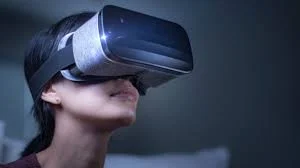
Then the world was upended. We now know that there are funny-looking objects on people’s nightstands and even on their heads.
Voice. Virtual reality. Artificial intelligence. Machine learning. Wearables.
Who asked for all of that?
If you believe that everything has changed for marketers, think again.
During interviews for my The Art of Digital Persuasion book, I learned that in many ways it is imperative to continue doing what you were doing despite the adoption of new technology.
Be Human
Machines are propelling us to up our marketing games. But they aren’t replacing us. And they never well.
Consider this. In 2017, Nike created “Breaking2”, an attempt for elite athletes to break the two-hour barrier for running a marathon. The number of people tuning in to the live stream on Twitter was nearly eight times higher than the broadcast audience of the New York, Boston and Chicago marathons. In total, 13.1 million watched the attempt live via Twitter, making it the company’s largest brand-powered, live-streaming event.
Of course, most of us won’t attempt to run a two-hour marathon - or any marathon at all. But we can all relate to the effort to maximize human achievement. That’s what Nike bet on and won.
Be Realistic
Understand that you can’t run a marathon, even in four hours, in flipflops.
“Everyone has to be relatively sober-minded when evaluating the possibility of a what might come in the future and realize that for all of us who are trying to predict what can happen in the future, we're all partially right and partially wrong,” Aaron Price, SVP of Global Marketing, Expedia told me.
In other words, give yourself a chance to succeed. But know that you will never be perfect. No one can be.
Drive Action
Involvement is everything. Regardless of the technology, seek to turn what might be a passive activity into one that your customers and prospects will see is interactive.
How? Interestingly, some brands have built upon the concept of user-generated content to entice customers to take part in user-generated product.
“If you think about Mayochup, which is a combination of mayonnaise and ketchup, Heinz put a Twitter poll out there and said if you get to 500,000 (participants), we're going to put these products on shelves in your local stores,” Stacy Minero, Head of Content Creation for Twitter, told me. “And that created a whole gamification of that campaign. And they got a billion (media) impressions within 48 hours.”
The lesson in all of this? Of course, see emerging technology for what it is – more screens, more interfaces, more complexity for marketers following or leading customers. But don’t think for a second that you should abandon what you know works.

Chatting About The Art of Digital Persuasion
Quality over quantity, the anticipated return on investment on emerging tech, and more were covered in a MobileChat on Facebook.
Please take a look and let me know if you agree with the insights of my experts.
https://www.facebook.com/MobilechatLive/videos/2157164054373919

Neiman Marcus Teaches Us To Differentiate Or Else
To believe that Dallas-based Neiman Marcus first discovered innovation in its second century is to make an error approximately the size of Texas.
One can go all the way back to the day it opened in 1907 to see evidence of the retailer’s forward thinking and acting.
It was the first to offer upscale fashion to the state’s wealthy, according to Wikipedia.
In 1927, Neiman Marcus premiered the first weekly retail fashion show in the United States.
Its history of innovation is deep and while nearly everything around it has changed, the retailer has survived in large part by its boldness.
“A company like Neiman Marcus didn't manage to survive one hundred and 10 plus years without being innovative,” Scott Emmons, the longtime head of the company’s innovation lab (or ‘I Lab’), told me in an exclusive interview for my new book, The Art of Digital Persuasion. https://www.amazon.com/Art-Digital-Persuasion-Innovative-Technologies-ebook/dp/B07NPCXMFJ/ref=sr_1_1?keywords=art+of+digital+persuasion&qid=1554466174&s=gateway&sr=8-1
“It’s not like innovation just got invented over the last 10 years because there were iPhones.”
Yes, on one hand, you can argue that Neiman Marcus has been there, done that. But these are extraordinary times for the retail industry. Brick and mortar stores by the thousands are shutting down. Businesses are needing to compete based on not just price, but on such factors as the ability to deliver purchases in two days or less and through the use of technology that digitally puts such things as eyeglasses on one’s face, a dining room table in one’s house, and product reviews in the palm of one’s hands.
“What we're seeing is how quickly the new disruptive ideas keep coming at businesses, and their efforts to keep up with that rate of change, be more agile, and be able to bring new ideas to the table faster,” Emmons said.
Those ideas have led to emerging tech such as voice, augmented and other flavors of reality, artificial intelligence, and more.
When I asked Emmons for advice for marketers, he preached a path of managed risk.
“There is a real temptation to go out and try that bright and shiny thing just because it's cool and everybody is talking about it, and there is all kind of buzz around it,” Emmons said.
“But in the end, you go back to the simple question of what kind of projects should we be tackling. Does it solve a real problem? Or let it evolve from being a solution looking for a problem to something that can solve a problem that you've identified that you have. That's how I look at it.”
When it comes to ROI, one size does not fit all.
“I think the type of projects that we work on are varied enough that those metrics tend to be different,” Emmons told me before leaving Neiman Marcus to join TheCurrent Global consultancy. “If you're working on an RFID project, maybe our metric is did we get our level of inventory accuracy to ‘X’ percent and because our inventory accuracy was better, we lifted sales by this much. You can apply actual traditional lift measurement to see how well something is performing.
“Then you have other types of experiences that have never been done before. And the amount of work it takes to actually tie it back into your transactional systems is large. And so it may be worth it just to try that experience and see if the customers like it, and observe how they interact with it, and sort of take a test drive and not necessarily have a defined ROI on it.”
Others I interviewed offered invaluable advice as well:
ESPN, all over your television guide and digital channels, notably uses a yardstick that measures how well as opposed to how many.
“Quality always wins,” Ryan Spoon, ESPN’s Senior Vice President of Digital and Social, told me. “And that pertains to any job. Whether you're creating the content, creating a product, you're distributing the content, marketing it, whatever that might be.”
To those seeking clarity on the question of when they will master digital marketing, Google’s Jason Spero believes that it is all tied to delivering for consumers.
“It's likely the question of when we get to the finish line might be the wrong metaphor,” Spero, Vice President, Performance Media, explained to me. “But rather how do we recognize consumers’ expectations and how might we be able to serve her needs in a way where she may not see the technology, but she's delighted by the experience?”
What I learned in writing The Art of Digital Persuasion is that successful businesses and marketers innovate to differentiate. The first action for you to take is to place that 2018 marketing playbook in the trash. That was then. The question is what are you going to do now?

How "Out With The Old" Can Leave You Out In The Cold
Artificial. Virtual. Augmented. Machine-driven.
These and other words have entered the marketer’s lexicon.
Out with the old. In with the new.
Or not.
“There's going to be a lot more innovation and disruptors,” Stacy Minero, Head of Content Creation at Twitter, told me in an exclusive interview for my new book, The Art of Digital Persuasion. https://amzn.to/2KmpMz7
“I’m not sure how it will play out. I do think that great stories that are rooted in human insight and strike a cultural chord will be sustainable forever.”
Of course, human insight has been key for marketers for generations. Minero appreciates the introduction of algorithms but sees them as an element in the modern marketing mix rather than a game-changing end-all.
“You're never going to take humans out of the creative process,” she said. “That’s because ideas come from understanding mindset and motivation and universal human truths. But I think technology will continue to up our game in terms of optimization, everything from understanding what hair color resonates in a video to the type of product and packaging you should showcase in a shot.”
Here are three more lessons learned during my half-year of spending time with a dozen digital marketing pioneers.
Participate Rather Than Only Observe
The decades-old concept of focus groups shouldn’t be dismissed even today. However, one expert strongly told me that we need to not just hear others talk about emerging technology, we should experience it ourselves.
“I've always been someone who likes to ‘live in the future’ and I’ve been fortunate enough to have roles where I’m working with cutting edge technology and then going out and speaking to others about what the impacts are,” explained Dave Isbitski, Amazon’s Chief Evangelist, Alexa & Echo.
“That means constantly looking at new technology trends, learning how they apply to our lives, and in the end teaching people what that future may look like. It helps generate people’s ideas and then they run with it. For a marketer, tech adoption is no different than any other topic. Keep on top of the latest buzz and trends, look at what the community is saying, whether through social media or at networking events, and start to use the latest technology in your own life.”
The learnings, Isbitski told me, are invaluable.
“Not being a late adopter can have tremendous benefit here,” he said. “I’ve talked to marketers who have been using Alexa since 2015 and the ideas they have for what conversations are possible are very different than someone who has never used a device at all.
“Using early versions of technology today can give you a vision for what tomorrow may look like.”
Remember History When It Comes To Adoption
“Any transformative technology encounters challenges to mainstream adoption in its early lifetime, such as cost, size, comfort, and technical barriers,” Microsoft’s Lorraine Bardeen, General Manager Studio Manager, Mixed Reality, told me. “We’ve seen this all before with the very first computers, the Internet, and mobile phones.”
Bardeen said that B2B usage commonly precedes B2C acceptance. That is why she is bullish on Microsoft’s HoloLens progress that has come with business growth.
“Just like the evolution of other similar technology, we expect momentum for the technology to begin in the commercial space and then trickle outward to consumers,” she said.
Microsoft’s Bardeen forecasts a place for all flavors of reality, including mixed, augmented and virtual.
“We believe that these are not separate concepts, but rather labels for different points on a mixed reality continuum,” she said. “The reality is that if one succeeds, then the ecosystem succeeds, and we’re interested in further education and adoption of the spectrum as a whole.
“Specific to marketing, this technology allows marketers to engage with their audiences in new interactive and immersive ways. The possibilities truly are limitless.”
Think Experience Rather Than Technology
Google’s Jason Spero has a healthy respect for technology. He, however, sees it more as an enabler than a story in and of itself.
“The consumer doesn't see the technology,” the Vice President, Performance Media, explained to me. “What the consumer sees is that they should be able to continue their game from a tablet to a mobile phone. That is a logical, rational, human thought.
“And so the better we can do in our research of studying those expectations of consumers, of understanding the moments where they expect things of us, and then drag the technology along with us kicking and screaming, we need to build those experiences.”
In summary, the digital leaders interviewed rely as much on the lessons of the past than the vision of the future. We would be wise to follow down that path.
-
(first appeared on Mobile Marketer - https://bit.ly/2X0AmgG)

Now What?
In 2015, I wrote The Art of Mobile Persuasion, a book about the relationships that people have with their mobile devices.
It’s safe to describe them then and now as intimate, engrossing and integral.
The central questions in The Art of Mobile Persuasion were whether brands have opportunities to get in on that action or is three a crowd?
Since then, some businesses have muffed the chance, taking an approach that has been deemed as invasive, impersonal, and/or offering no value. But others large and small have knocked gently, ingratiated themselves, brought something that was welcomed, and seen resulting increases in awareness, loyalty and sales.
To the former group, what were you thinking?
To the latter, we’re good now, right?
Well, no.
Why? The playing field has changed.
Our nurtured customers and prospects are now being wooed by other means.
Though voice interfaces.
And wearables.
Smart appliances, even toilets.
And OTT (over the top) devices.
Virtual and mixed reality software and hardware.
And the list goes on. There’s every reason to believe that the pulls for attention will grow this year, next year, and every year after that.
Of course, this brings with it all sorts of complications.
· Where will we find our customers and prospects?
· Where we do want to lead them and what must they find when they get there?
· How does all of this innovation affect the customer journey?
· If personalization is the so-called North Star, how do we deliver this on the screens and interfaces of today – and the ones surely coming behind those?
And how does the relationship that your brand has steadily built with customers via the mobile phone survive, evolve, and thrive when eyes and ears are drawn to even more places?
In my new book The Art of Digital Persuasion, the conversation broadens to today’s interfaces, devices, behaviors and technologies.
I again have had the pleasure and privilege of visiting with some of the sharpest marketers and other business leaders that one can identify. I sought out real-world experience, perspective, and advice to give us the knowledge, skills and confidence that we all need to do our jobs -- and, in many cases, to reimagine our current outdated positions given these upended times.
I share what leaders from Amazon, Google, Microsoft, Twitter, ESPN, and others are doing and thinking to address the core question of the new book:
Now what?
The book is now available on Amazon. https://amzn.to/2G4CrCu
I hope that you’ll give it a look and take the time to learn from these experts just as I have.

Super Bowl Teams, Advertisers Do Little But Punt
There were 14 punts in Super Bowl LIII, and that’s not counting those from advertisers who developed and ran spots more suitable for 1974 than 2019.
The snooze-a-thon that became another coronation for the New England Patriots was boring—just ask Kristin Lemkau, CMO at JPMorgan Chase, who despite being a Patriots fan, scrolled “Boring, Boring, Boring” on her Twitter feed during the second half of the game.
The blame for that is equally shared between the Patriots, Los Angeles Rams and brands. Sports columnists have torn into the teams for their inept play, but we’ll take up the advertiser performance here.
Brands regressed in attempts to engage the mammoth audience. It’s not that the creative was noticeably less compelling than in previous years. In fact, it struck me as similar with ads featuring dogs, rappers, new automobiles and coming films.
It’s the lack of calls to action that are an unforgivable offense given what we know: a mobile device was either in hand or within four feet of well over 100 million potential consumers. What was striking was the decline in the appearance of any call to action, be it a hashtag, website or other. And for many of those ads that did have a CTA, the time on-screen was shorter than a Rams’ possession.
Among those advertisers who punted:
Every studio that introduced a film
Some—maybe all—generated interest on Sunday, but each dropped the ball by leaving it there rather than asking viewers to engage between now and their movie’s opening. Through a simple opt-in, the audience could’ve seen additional content, been given a chance to attend the premiere or even entered a contest to meet a movie star. None of that happened.
Bon & Viv Spiked Seltzer
Certainly, the mermaids and sharks caught our attention, and I get that the piece was to build awareness. But how do we follow up on that interest, learn more about the product or even get an offer to try it?
Hyundai
Its “The Elevator” spot creatively showed how buying a car doesn’t have to be as painful as we’ve all known it to be. Once the automaker made that point, it failed to show us where to sign up and learn more about the process.
The National Football League
It’s “100-Year Game” spot showed some of the league’s all-stars. Behind-the-scenes footage, especially outtakes, would’ve been perfect to offer via a call to action.
Devour
The brand released an uncensored version of its spot on social media because it couldn’t use the word “porn” on TV. But where was the CTA to get viewers to go to the more provocative one?
We did see one significant change on Sunday, though. Burger King, Verizon, T-Mobile and Intuit’s TurboTax were among those that went against recent trends by keeping their spots under wraps until the telecast.
Shiv Singh, the former digital lead at Visa and Pepsi, questioned those moves, saying, “This feels a bit like a retro strategy. I saw time and again we’d get greater mileage by releasing early and building a broader narrative around the ad.”
Another idea for greater mileage is for brands to ask viewers to do something during the telecast. Make the ask interesting, and in the process, create a mechanism for a dialogue. How about giving that a try, just for kicks?
(first appeared here - https://www.adweek.com/agencies/a-rundown-of-the-super-bowl-spots-that-neglected-to-include-a-call-to-action/)

What Wasn't At CES Matters Most
There were 2.7 million net square feet of exhibit space at this year's Consumer Electronics Show (CES) in Las Vegas. For mobile marketers, what wasn't there was far more noteworthy than what was.
5G was nowhere, despite claims made all around the expo. Samsung booth signage actually said "5G is the answer" and "Samsung End-to-End 5G Solutions are Ready" yet the first claim is to be determined (and just what is the question?), and the second claim was debunked by a "prototype 5G smartphone" running without a 5G connection.
"We are at the entrance, we are at the door, we are about to step into 5G," Liya Sharif, Qualcomm's head of global brand, content and creative services, said at Wunderman Thompson's Future Ready breakfast. "5G will be as transformational as the internet was."
Sharif said that 5G will make connectivity speeds five times faster and limit latency, and that "connectivity will be like electricity."
At what pace 5G will push satisfied smartphone owners to upgrade their devices remains to be seen. Dial-up to broadband was an obvious improvement and became a must-have when price and availability worked for consumers. There are likely lessons there as we plan for 5G's broader rollout.
Sharif said that marketers will be in the game beginning in three to six months when, according to the executive, we will see the first smartphones truly running on 5G at speeds five times faster than what is being used today.
"The use cases are endless," she said. "5G will open new audiences for us. Movies will be downloaded in one minute. There will be more complexity in the marketing stack and it will require a new level of creativity. Branding will elevate. It will happen organically. We'll need to deliver higher value messaging versus rational messaging."
Here are six other observations from CES:
- Seasoned CES attendees knew better than to expect significant mobile hardware innovation to be introduced in Nevada. Those in search of flexible devices had to settle for the Royole FlexPai, which debuted in Beijing in October. Frankly, I'm still in search of the problem that flexible smartphones will solve.
- Brands will soon have a way beyond radio, mobile ads and marketing messages to reach consumers in cars. Honda announced its beta Dream Drive program that introduces a dashboard that rewards opted-in drivers and passengers for using the car's connected capabilities. Drivers can earn points for using the dashboard to navigate to their next destination, pay for gas, order food or make other purchases. Passengers can also get points for listening to the radio or playing games through a Honda app. Whether significant numbers of people will consent to have their data shared with brands is yet to be determined. Honda promises brands "last mile" data showing how their marketing led to sales.
- Reality had a larger presence. A marketer can dismiss the sight of driving in a moving vehicle wearing a headset — that looked dangerous and the least viable product shown at the show. There were some interesting displays of augmented reality, but also unbelievable claims that the software is so intuitive, anyone can create an experience.
- One is left to think that beyond smart home hardware, consumers will need to choose an ecosystem of products and services. Branding has a role here alongside product marketing.
- Voice assistants were everywhere, even in places you might not want them to be — think smart toilets. For marketers, this category is not one for the future. Figure out your brand strategy around voice now given the adoption and increased daily user activity.
- Despite the fact that we saw even larger TVs with clearer displays, other screens were discussed in a talk by Turner President David Levy. "Television is content," Levy said. "It's not that screen in your living room anymore." Levy told marketers to concentrate on what he called the "three A's of advertising:" audience (know the demographic), addressability (personalize) and attribution (measure results).
(First appeared here https://www.mobilemarketer.com/news/what-wasnt-at-ces-matters-most/545875/)

Seven Ways 2019 Will Change the Way We Market, Sell, and Live Our Lives
For marketers in 2019, everything and nothing will change.
Ultimately, our businesses will still need to sell stuff. And that will surely be true again in 2020, even 2030, and every decade after that.
But, oh, will the how be different next year and beyond.
Rest assured, this isn’t another one of those predictions pieces that promises revolution and absolutes. No, cash won’t entirely go away in 2019. Voice won’t replace desktop or mobile search in 100 percent of the cases. Penetration of wearables won’t reach 100 percent despite increased interest in monitoring health as well as package delivery times.
Here are seven ways that emerging technology will affect how we market, sell, and live our lives.
The mobile phone and app will continue to be a linchpin and actually start to provide more information to other devices. For instance, with an iPhone and a HomePod, you can now turn on personal requests to your device. And because you don’t have to log in again, it’s a “next level of mobile device” value.
Key stat: Nearly one in five U.S. adults today have access to a smart speaker (Voicebot). You would be hard-pressed to find any study that offers a prediction of maturity in the market, or one that says that masses will stop using their smartphones. Use of both will be more prevalent in 2019 (TechCrunch).
For innovation areas such as augmented reality, brands will have success without having to go all-in. Some proof of concepts will take only one person and three days.
Key stat: Augmented reality experiences will be noticed and resonate with at least some consumers: 38 percent hope to see improved experiences in stores, while 35 percent want improved customer service based on individual needs, and another 35 percent seek improved ways to find and compare different products (GfK).
The most elaborate of experiences created for customers will only succeed if they are viewed as personal, or at least relevant.
Key stat: 79% of consumers say they are only likely to engage with an offer if it has been personalized to reflect previous interactions the consumer has had with the brand. (Marketo)
Brick and mortar, combined with mobile and digital experiences, will differentiate. Why? It’s what pure online commerce cannot match.
Key stat: 71 percent of millennials believe a significantly enhanced retail experience would increase their in-store visits and purchases (Roth Capital).
Voice interfaces will continue to gain share, but for many products in shopping categories, many will need to see as well as hear.
Key Stat: Voice commerce alone is not enough for most consumers: 89 percent said they’d like to see the product on a screen before a voice assistant orders it (Salmon).
While virtual reality won’t go mass in 2019, brands taking measured steps forward will see value by way of earned media, social mentions, and relevant articles.
Key stat: While no one can credibly argue that VR has gone mass, efforts tied to Oculus, Magic Leap, and others have seen considerable earned media and social media focus while spending relatively little on paid media.
Machine learning will lead to happier customers if used to keep shelves stocked with desired merchandise.
Key stat: 75% of enterprises using AI and machine learning enhance customer satisfaction by more than 10% (Capgemini).
I’ll close with a couple more pieces of advice. Review your 2018 marketing playbook (you have one, right?) and take note of what went as planned and what veered at least somewhat off the mark. For all the reasons mentioned above, by no means rinse and repeat your 2018 playbook for 2019.
Finally, the model of having a playbook for a full year is increasingly foolhardy. The world is moving that fast. Create your plan, then revisit it at least every quarter and make any necessary changes.
Just as your consumers are doing with their devices and behaviors.
(first appeared here - https://possiblemobile.com/2018/12/2019-will-change-way-market-sell-live/)

It’s Digital and Brick and Mortar Retail This Holiday Marketing Season
To listen to the likes of those who hype, intentionally misinform, or peddle preposterous predictions like the supposed end of mobile apps, brick and mortar stores will be deserted this holiday season while consumers in overwhelming numbers will go mobile-only in their pursuit of shopping for gifts.
Common sense, history, and new research tell us that neither will happen.
Why do I say this?
There are few-to-no absolutes in mobile and technology. As an example, we were told that cash was going to be gone by some Tuesday in 2013, replaced by the mobile wallet. I’ll bet you the $10 in my pocket that you have at least that much right now in one of yours.
What will happen this holiday season – and you can bank on it – is that physical and digital will play complementary roles in the buying journey.
In fact, according to Adobe Digital Insights, online retailers with physical storefronts especially stand to benefit over the next several weeks. These businesses have seen a 28 percent higher online conversion year-to-date leading into November and December. In the consumer survey portion of the analysis, 47 percent of the 1,000 participants indicated they would visit a store to see a product they intend to purchase later online.
Consumers will spend $5 of every $6 in stores. Yes, you read that correctly.
But that leaves $124.1 billion online breaking out this way: 57 percent of retail visits will come from mobile devices (tablets and smartphones), accounting for 37 percent of total online purchases, ADI predicts.
ADI forecasts 48 percent of all visits to retail websites will come from smartphones. And 27 percent of all online revenue will come from those smartphone visits. Tablets, which not that long ago were presented by some as the most desired lean-back shopping tool, will account for 9 percent and 10 percent, respectively.
Why am I so confident that mobile apps will not only drive business this year but are here to stay? First off, mobile apps are twice more likely to convert shoppers than the traditional Web, ADI says. This higher conversion is correlated with 2.4 times higher time spent in apps, 30 percent better content relevancy, and 25 percent better return frequency.
Second, mobile apps are still finding their way to devices. Nearly two apps are downloaded every month per human being on the planet, according to App Annie. As to the future, the Pew Internet Project projects the following:
“In 2020… there will be a widespread belief that the World Wide Web is less important and useful than in the past and apps are the dominant factor in people’s lives.”
I’ll bet you a second $10 that in the holiday season two years from now, we will still be looking at apps and physical stores complementing each other. Certainly, some stores will close, but others answering consumer desires will thrive with such innovation as skip the line checkout (Target most notably introduced that nationwide recently), curbside pickup, and in-store augmented reality and other experiences enhanced by mobile devices in hand.
To think otherwise flies in the face of everything we know and have seen.

Despite Recognizing the Importance of Personalization, Marketers Are Still Missing the Mark
By the time the holiday shopping season arrives, you and I will have been exposed to, on average, well over one million brand messages in this calendar year alone.
As a result of that onslaught, we’ve spent 2018 sending signals every time we clicked, tapped, physically visited or flat-out ignored these communications, which averages out to more than 4,000 a day.
We’ve told marketers of our extraordinary interest in some things and our indifference in others. Businesses now know (or should know) every dollar that we spent with them with granular information that gave them daypart, offer acted upon and purchase pattern, among other particulars.
Of course, this was true last year. Then the holiday shopping season came, and for the most part, we were treated by businesses as equals. The channels and screens were different from our youth, but the marketing was unquestionably one-to-all as if we were still enthralled by The Ed Sullivan Show.
What’s changed in 2018?
Not a thing that I’ve noticed in my inbox. I shake my head and delete en masse as much or more than ever. Little that has been sent to my phone has a new and more me, not just everyone, feel. It seems vintage 2017. Or even 2016. Some communications are relevant if not directed to me. But many others aren’t the least bit interesting, much less something that accounts for my likes and dislikes.
My laptop follows a similar pattern. Nothing personal. Each time that I receive something that reads like “Dear Generic Customer,” I think, “Dear God.”
I’ve never, ever had a meatball sandwich from your quick-service restaurant. You, Mr. or Ms. Marketer, know—or should know—from my purchase history that my diet is vegetarian. Why am I still getting those damn meatball ads?
As the season changes and focus for marketers turns to the make-or-break selling season, I’ll again ask: What is it going to take?
If you wonder if it matters, 80 percent of respondents in an Epsilon poll indicate they are more likely to do business with a company if it offers personalized experiences and 90 percent indicate that they find personalization appealing. According to McKinsey, personalization can reduce acquisition costs by as much as 50 percent, lift revenues by 5–15 percent and increase marketing spend efficiency by 10–30 percent.
The vast majority of marketers (98 percent) in an Evergate survey believe that personalization has at least some impact on advancing customer relationships, while 74 percent believe personalization has a “strong” or “extreme” impact on advancing customer relationships. Yet only 12 percent of marketers are “very” or “extremely” satisfied in the level of personalization in their marketing efforts, while 38 percent are “moderately” satisfied.
As one on the receiving end of marketing campaigns, I’m not even in the moderately satisfied bucket.
The most egregious disconnect for me in the last year was after my wife and I were met with a dirty sock, used robe and rumpled, dirty sheets upon check-in at the Magnolia Hotel in Denver. Despite voicing our displeasure to three employees, our emailed bill the next morning came with this opening: We hope you have enjoyed your stay with us.
To be sure, some brands have improved digital personalization efforts (colleagues and others do an admirable job online and in mobile apps, for instance). No one, including Gartner analyst Noah Elkin, said that this personalization stuff is easy. He sees marketers taking a crawl, walk, run approach.
In crawling, businesses do simple segmentation, grouping customers and prospects in buckets depending on behavior. Outreach happens one-to-many. By walking, marketers look at customers and prospects across channels and determine through customer relationship marketing how best to reach out. It’s still in groups, but with more confidence and accuracy in delivery something of value. Those who run deliver on one-to-one marketing, expertly using CRM plus artificial intelligence and machine learning to maximize efforts.
Sadly, I’m expecting many brand walkers to keep that same pace this holiday season. Hype will tell you otherwise. But until I see it, it’s one more thing that I’m not buying.
-
(article first appeared here - https://www.adweek.com/brand-marketing/despite-recognizing-the-importance-of-personalization-marketers-are-still-missing-the-mark/)
